Arnold Wesker The Kitchen Pdf Editor

Arnold Wesker: food for thought. After all, his dramas Chicken Soup with Barley and The Kitchen have recently enjoyed successful revivals; Roots is currently on tour; and a three-play Wesker mini-festival has just opened in London to coincide with the writer's 80th birthday this month. Yet Wesker, knighted in 2006, still feels an outsider in the British theatre. The kitchen, as the dialogue makes clear, is a metaphor for the workplace (offices and factories are specifically mentioned) and indeed for society itself—for a society corrupted or even driven mad by greed. The interplay of character, dialogue, and work routine in The Kitchen is very complex, but it is possible to pick out three major ways in which people’s lives are shown to be affected.
August 3, 1975, Page192Buy Reprints

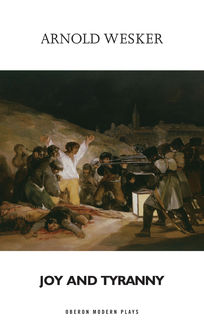
Arnold Wesker is the English Jewish dramatist whose plays, mostly of East End life—“Ohicken Soup With Barley,” “I'm Talking About Jerusalem”—fitted in with the “kitchen” plays of lower‐class life by radical English dramatists of the fifties and sixties. Jewish writers of immigrant workingclass vintage do not get a hearing in England as easily as their counterparts do in America. Weskees emergence was clue in part to the radical temper of the postwar British theater, but above all to the fact that he handled abrasive subjects — Jewish Communists, high‐pitched emotions inside the Jewish family—with a notable lovingness, tact and respect for the working‐class mores in general.
This collection of stories shows that same notable gift of affection, a dramatist's flair for “big” speeches not always suitable to the short story, a certain genteel, lifted‐pinky self‐consciousness in the handling of narrative prose. It is an interesting, sweet book, by no means overpowering. Wesker's steady and even overeager sympathy for his characters suggests that, for a writer, he must be the easiest fellow in the world to get along with. But there is a lack of edge, of necessary distance, in the handling of all these gently suffering East End Jews and other working‐class types become middle class. The interest of these stories for me is not so much in their art (which is on the soft side) as in the evidence of the disillusionment, guilt and spiritual confusion of working‐class radicals. These people have grown acquiescent and miserable in what the most passionate of all Laborites, Aneurin Bevan, bitterly denounced with his dying breath as “the meretricious society.”
In “I'm Talking About Jerusalem” (1960), the young writer Ronnie Kahn was already lamenting: “A whole generation of us laid down our arms and retreated into ourselves: a whole generation!” Far from the militant rallies for the Spanish Republic and the excited resistance to Oswald Mosley's Fascists coming down to the East End to beat up Jews, Wesker's characters are now elegiac to the point of doing big operatic arias before doing away with themselves.
Say Salaam India. 2006 NR 2h 45m DVD. Rent this movie. Overview; Details; Cast. When dedicated cricket coach Hari Sadu is fired from the prestigious Royal Heritage School and replaced by a slick-talking cad, he vows to turn a ragtag group of wrestlers from the local corporation school into interschool cricket champions. Say Salaam India. Principal Goswami of prestigious Royal Heritage High School recruits his chum, Hari Sadu, to coach his school's five-time winning cricket team, only to let him go following complaints of abuse. Milind Soman. Sandhya Mridul. Subhash Kapoor. Download movie say salaam india. Watch Say Salaam India: 'Let's Bring the Cup Home' 2007 Full Hindi Movie Free Online Director: Subhash Kapoor Starring: Sanjay Suri, Milind Soman, Sandhya Mridul, Sachin Khedekar Genre: Drama, Sport R. Watch Say Salaam India (2007) full movie online in HD, 720p, 1080p. Released on 3 March 2007. This Drama, Sport movie directed by Subhash Kapoor. Say Salaam India (2007) stars by Milind Soman, Sandhya Mridul, Sanjay Suri. Say Salaam India Hindi Movie Online - Sanjay Suri, Milind Soman and Sandhya Mridul. Salaam Namaste Hindi Movie Online - Saif Ali Khan, Preity Zinta, Arshad Warsi and Tania Zaetta. Unlimited Download Watch Free Full Movies Online with HD Quality And Fast Downloading Speed Without Any.
In the long short story, “Six Sundays in January,” a gentile friend says to Katerina Levinson: “You talk of community in the slums and you hanker backwards to a kind of cozy poverty, but you—finger your own friends with sneers a mile long.” (As Bernard Shaw said, it's the common language that divides the English from Americans.) Katerina says, among many other things—“I see headlines about wars and itunine which witness a relentlessly monumental stupidity from political leaders about which I can do nothing. I see my friends surrender to a facile image of themselves that countless magazines genetrate—and you tempt me with the commonplace when I need grandeur..”
I doubt that they talk this way in Hampstead, and they certainly never used to in the East End. Anyway, Katerina commits suicide.
“A Time of Dying” is about the many deaths in the first immigrant generation; “Pools” is about a nice old Jewish widow who dementedly expects to win £70,000, then sadly comes to her senses. In “The Man Who Became Afraid,” a successful engineer, Sherida?? Brewster, discovers that he has become afraid of everything. But the real point, as always with Wesker, is that the personal fear masks a profound horror of what society has become. “Not only did he see men as unequal, he felt relief that it was so, and the sense of relief disgusted him. His soul turned grey with fear. He'd not been a socialist for a long time.”
The title story, the last and best one in the book, tells of a noble, gallant trade‐union leader, secretly ill with leukemia, whose awkward and surly wife, never‐one for much talking, feels compelled — within the same household — to write him amazingly eloquent, direct, soulful confessions of her love for him. These letters on blue paper, which her husband comes upon in the most unexpected places, bear no salutation and signature; they just start right in with prayer‐like intensity. Neither wife nor husband ever says anything to each other about these letters, but they give him the confidence to face death.
Wesker's notable gift of tenderness, which works better here than elsewhere, nevertheless makes the familiar point. The dying union leader has proved too incorruptible for his colleagues; there is no longer a climate in England for the cause to which he has given his life. So the meaning of his wife's letters is not that love conquers all, but that her love is a surrogate for the cause. Since this is really a book about death of “commitment,” it is not always easy to take seriously the insistence on so much love of a single person. Welker almost succeeds, however. He is a great believer in belief—whatever the occasion or pretext. ■
Arnold Wesker The Kitchen Pdf Editor Full
By Arnold Wesker. 186 pp. New York: Harper & Row. $7.95.